The Unsettled Foundation: Why a Core Axiom Still Divides Mathematicians
Introduction: The Unending Chain of Proof
Mathematics is often seen as the pinnacle of certainty. Every theorem is backed by a rigorous proof, each step justified by a previously established result. This creates a vast network of interconnected truths, each resting on the shoulders of earlier ones. But if you trace this chain backward, you eventually reach a point where the process must stop. At the deepest level, we encounter statements that cannot be proved—they are simply assumed to be true. These are the axioms, the foundational building blocks of mathematical systems. One such axiom, known as the Axiom of Choice, has sparked one of the most heated and enduring controversies in the history of mathematics.
The Need for Axioms
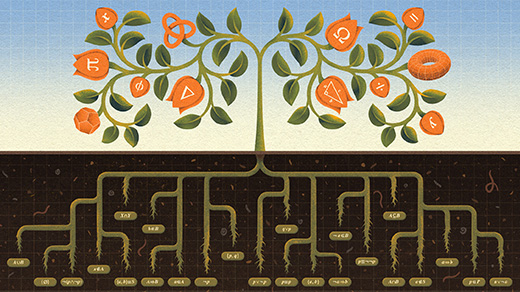
Every mathematical theory begins with a set of axioms—basic, unproven assumptions that define the objects and rules of the system. For centuries, mathematicians believed that axioms were self-evident truths, so obvious that no proof was required. Euclid's geometry, with its five postulates, epitomized this view. However, the discovery of non-Euclidean geometries in the 19th century shattered that illusion. Mathematicians realized that axioms were not universal truths but rather starting points chosen for their usefulness or consistency. This shift opened the door to alternative sets of axioms, each giving rise to different mathematical universes.
The Axiom of Choice: A Lightning Rod for Debate
Formulated by Ernst Zermelo in 1904, the Axiom of Choice states that for any collection of non-empty sets, there exists a way to choose exactly one element from each set, even if the collection is infinite. At first glance, this seems harmless—after all, if you have a bunch of bags with marbles, you can always pick one from each. But the controversy arises when the collection is uncountably infinite, and there is no rule or algorithm to specify which element to pick. The axiom says such a choice exists in principle, even if we can never describe it concretely.
This non-constructive nature ignited fierce opposition. The French mathematicians Émile Borel, Henri Lebesgue, and René Baire argued that mathematics should deal only with objects that can be explicitly defined or constructed. To them, the Axiom of Choice was a dangerous departure from the concrete, tangible world of mathematics. On the other side, Zermelo and later supporters like David Hilbert defended the axiom, pointing out that many essential theorems—such as the fact that every vector space has a basis, or that the Cartesian product of non-empty sets is non-empty—depend on it.
Arguments For and Against
Why Many Mathematicians Embrace It
The Axiom of Choice is immensely powerful. It enables proofs that would otherwise be impossible, shaping large parts of modern mathematics:
- Zorn's Lemma (equivalent to the axiom) is used to prove the existence of maximal ideals in ring theory and the existence of a basis for every vector space.
- The Banach–Tarski paradox, which uses the axiom to decompose a sphere into finitely many pieces that can be reassembled into two identical spheres, demonstrates both the power and the unsettling nature of the axiom.
- In set theory, the axiom allows us to compare the sizes of infinite sets and establish the existence of well-orderings.
Without the axiom, many fundamental results would collapse, and mathematics would be far more fragmented.
Why It Remains Contentious
Opponents point to several troubling consequences:
- The Banach–Tarski paradox feels like a violation of physical intuition—though it only applies to mathematical spheres, not physical ones.
- The axiom implies the existence of non-measurable sets, which cannot be assigned a meaningful volume, complicating measure theory.
- Constructivist mathematicians reject it outright, insisting that existence proofs must provide an explicit construction or algorithm.
The debate is not about truth but about foundational philosophy. Those who favor platonism (the belief that mathematical objects exist independently of the human mind) tend to accept the axiom; constructivists and intuitionists do not.
Resolution and Legacy
In the decades following Zermelo's formulation, the mathematical community gradually reached a consensus: the Axiom of Choice is consistent with the standard axioms of set theory (ZF) but independent of them. This was proven by Kurt Gödel in 1938 (showing that if ZF is consistent, then ZF + Choice is also consistent) and by Paul Cohen in 1963 (showing that ZF without Choice is consistent as well). In other words, mathematics can be developed both with and without the axiom—each choice leads to a different, equally valid mathematical universe.
Today, the Axiom of Choice is accepted by the vast majority of working mathematicians, especially in areas like analysis, algebra, and topology. However, it is always explicitly mentioned when used, and some fields (such as constructive analysis) deliberately avoid it. The controversy has ultimately enriched mathematics by clarifying the role of axioms and the nature of mathematical truth.
Conclusion: The Ever-Present Choice
The story of the Axiom of Choice illustrates that mathematics is not a monolith. The choice of axioms—even the most fundamental ones—is a human decision, driven by aesthetic, practical, and philosophical preferences. The controversy over this final axiom
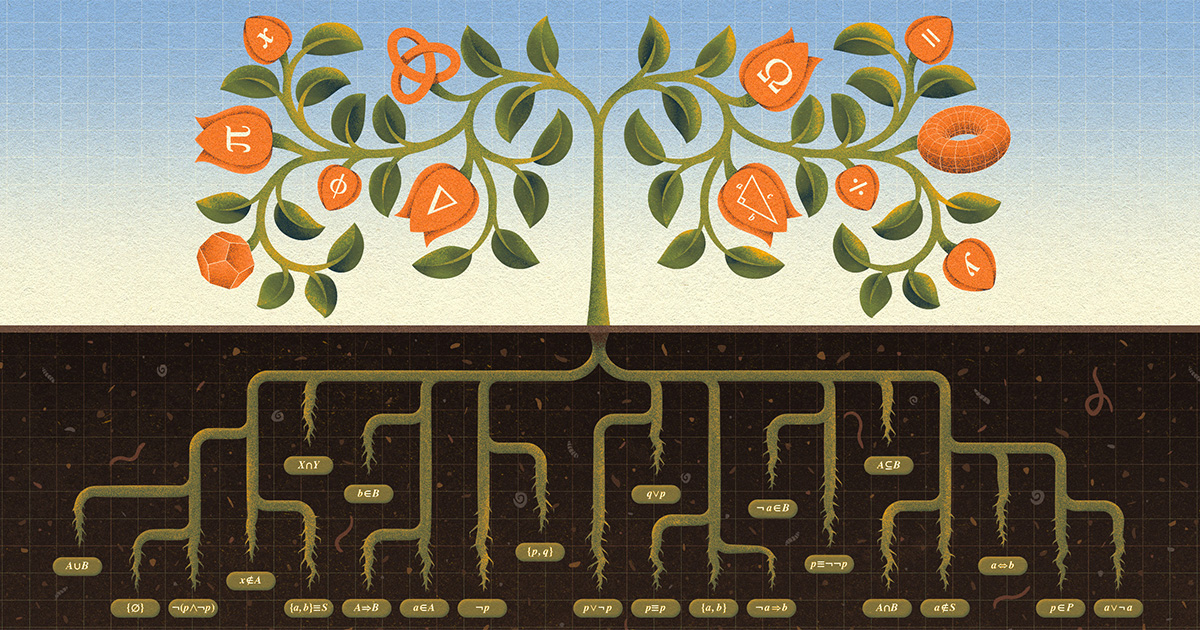
reminds us that there is no single, absolute foundation for mathematics. Instead, we have a branching tree of possible systems, each with its own internal consistency and beauty. For the mathematician, that very multiplicity is a source of endless fascination.
Related Articles
- How to Migrate from Chrome to Samsung Browser on Windows: A Step-by-Step Guide
- Gödel's Unknowability Unlocks Unbreakable Codes: Mathematicians Reveal New Encryption Method
- Wendy's Accelerates Store Closures: Over 200 Locations Shuttered as Turnaround Plan Takes Hold
- 10 Essential Insights into Apache Camel Observability Services
- Meta AI Integration on Threads Sparks Debate: What Users Need to Know
- 10 Essential Strategies for Closing Network Incident Response Gaps
- Your AI Email Assistant May Be Spying On You: What You Need To Know
- macOS 27: Liquid Glass Gets a Tune-Up, Not a Funeral