Accelerating Electronics Production: A Guide to Automated Manufacturing and Assembly (CircuitHub Case Study)
Overview
The electronics manufacturing industry has long struggled with long lead times, often taking months to go from prototype to production. However, a wave of automation is disrupting this status quo. CircuitHub Inc., a company building automated manufacturing and assembly systems for electronic hardware at scale, recently secured $28 million in funding led by Plural to advance its mission. This guide explores how CircuitHub’s approach can help companies produce electronics in days rather than months, covering the prerequisites, step-by-step implementation, common pitfalls, and a summary of key takeaways.
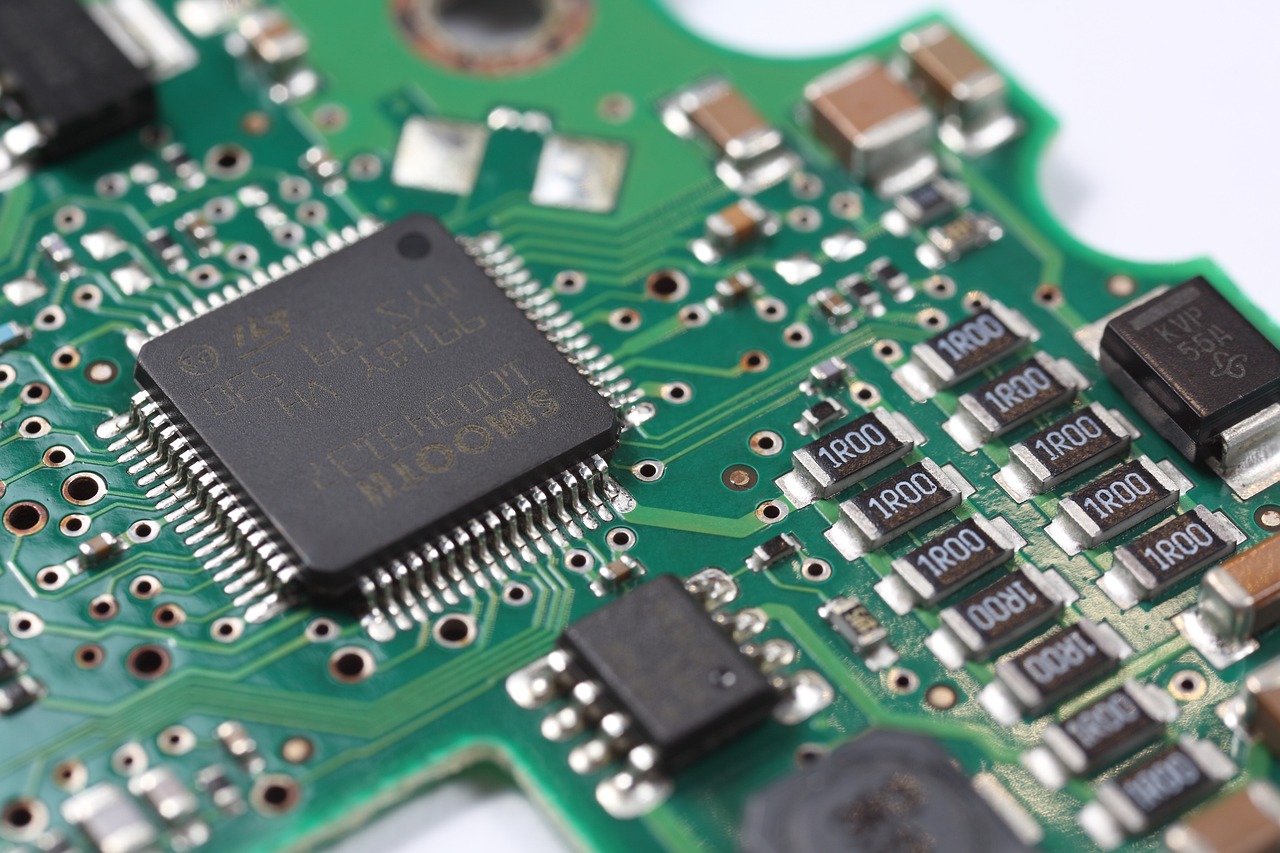
The core premise, as articulated by CEO Andrew Seddon, is that the same hardware innovations that created the electronics market—namely automation—can now be applied to its manufacturing. This tutorial is designed for hardware engineers, product managers, and startup founders looking to reduce time-to-market for electronic products.
Prerequisites
Before diving into the automated production process, ensure you have the following foundational elements in place:
- Design for Manufacturing (DFM) Knowledge: Understanding DFM principles ensures your PCB designs are optimized for automated assembly.
- Validated Prototype: A working prototype (e.g., from a low-volume run) that has been tested and approved.
- Bill of Materials (BOM): A complete, verified BOM with component sourcing details.
- Gerber Files: Standard PCB manufacturing files, including drill files and solder paste stencil layers.
- Partnership Interest: Willingness to work with a manufacturing partner like CircuitHub that uses automation-driven processes.
Step-by-Step Guide to Fast Electronics Production
Step 1: Design for Automated Assembly
The first and most critical step is to ensure your PCB layout is compatible with automated pick-and-place machines. This involves:
- Using standard component footprints (e.g., 0402, 0603, SOIC, QFP) that are easily handled by robotic arms.
- Avoiding manual-only components like through-hole connectors where possible; opt for surface-mount equivalents.
- Including fiducial marks for machine vision alignment.
- Designing with symmetric placement to minimize board rotation time during assembly.
CircuitHub’s platform includes automated DFM checks that flag potential issues before production, as highlighted in their recent funding round. Use these checks early to avoid costly re-spins.
Step 2: Prepare Your BOM and Source Components
Automated production thrives on high-quality BOM data. Follow these guidelines:
- Create a detailed BOM with manufacturer part numbers, quantities, and preferred suppliers.
- Check availability and lead times for each component; use in-stock parts whenever possible.
- Consider using a consolidated parts list that accounts for multiple variants (e.g., different resistor values).
- Upload your BOM to CircuitHub’s system, which automatically cross-references inventory and suggests alternatives if components are obsolete or scarce.
Andrew Seddon emphasizes that automation extends to sourcing: CircuitHub’s algorithms optimize component procurement to reduce delays—a key factor in turning months into days.
Step 3: Upload Design Files and Configure Order
Once your design is ready, upload your Gerber files, BOM, and pick-and-place (centroid) file to CircuitHub’s portal. The system will:
- Automatically parse the files and generate an instant price and lead time quote.
- Allow you to select panelization options (e.g., V-scoring or tab routing) for efficient batch production.
- Offer options for additional services like conformal coating, testing (flying probe or ICT), and programming of microcontrollers.
Note: For prerequisites, ensure your files are in the correct format (e.g., ODB++ or Gerber X2). Incorrect formats can cause parsing errors, leading to delays.
Step 4: Review Automated DFM Report and Approve
CircuitHub’s software performs automated design-for-manufacturing analysis within minutes. Review the report for:
- Solder mask slivers or clearance violations.
- Component-to-component clearance issues.
- Missing or incorrect files.
- Placement errors (e.g., components on both sides incorrectly assigned).
Correct any issues by updating your design files and re-uploading. Once satisfied, approve the order to move to production.
Step 5: Automated Assembly and Testing
CircuitHub’s factory uses robotic cells that integrate solder paste printing, pick-and-place, reflow soldering, and inspection. The process is:
- Solder paste is applied to the PCB using a stencil, with automated alignment checks.
- High-speed pick-and-place machines (with multiple gantries) populate components at rates exceeding 30,000 components per hour.
- Boards go through reflow ovens with temperature profiles controlled by software to ensure proper solder joint formation.
- Automated optical inspection (AOI) scans every board for soldering defects.
- Optional: flying probe testing verifies electrical connectivity without the need for a custom test fixture, saving days of tooling.
The entire cycle from file upload to completed boards can be as short as 2–5 business days, depending on complexity and volume.

Step 6: Ship and Validate Prototype Runs
Completed boards are packed and shipped. CircuitHub’s platform provides real-time tracking and certificates of conformance. For first-time orders, we recommend ordering a small quantity (e.g., 10–100 boards) to validate the automated process before scaling to larger volumes. Validate functionality with your own test procedures.
Common Mistakes and How to Avoid Them
Mistake 1: Ignoring DFM Rules for Automation
Many designers create boards optimized for hand assembly or low-volume prototype runs. These often require manual rework when shifted to automated lines. Avoid this by always designing with pick-and-place machine capabilities in mind. Use standard component sizes and avoid odd-shaped components unless absolutely necessary.
Mistake 2: Incomplete or Incorrect BOM
Missing part numbers, wrong package types, or obsolete components can halt production. Always double-check your BOM against the actual physical parts you have in hand. Use distributors’ databases to verify lifecycle status. CircuitHub’s system flags issues, but it’s better to prevent them early.
Mistake 3: Assuming All Automated Services Are Identical
Not all automated manufacturing platforms are equal. CircuitHub’s advantage lies in its software-driven supply chain coordination and automated DFM checks. Some competitors still rely on manual quoting or slow tooling. Choose a platform that prioritizes end-to-end automation, as evidenced by the $28M investment in CircuitHub’s technology.
Mistake 4: Neglecting Testing Requirements Until the Last Minute
If your board requires custom test fixtures (e.g., for high-volume ICT), lead times can be weeks. For fast production, opt for flying probe testing, which is software-driven and can be set up from the same files used for assembly. Specify testing requirements early in the order process.
Mistake 5: Underestimating Panelization Impact
Improper panelization can cause breakage during depaneling or interfere with assembly. Consult CircuitHub’s guidelines for V-scoring depth, mouse-bite holes, and tab placement. Run a simulation if available.
Summary
CircuitHub’s $28 million funding round validates the market’s demand for faster electronics production through automation. By following the six steps outlined—designing for automation, preparing a solid BOM, uploading files, reviewing DFM, leveraging automated assembly, and validating—you can reduce a typical 3-month timeline to just a few days. The key enablers are automated DFM checks, robotic pick-and-place, and software-driven testing, all integrated into a single platform. Avoid common mistakes by adhering to DFM guidelines, keeping BOMs accurate, and choosing testing methods that don’t require custom fixtures. As the industry shifts toward faster cycles, adopting such automated manufacturing methods is no longer optional—it’s a competitive necessity.
Related Articles
- Build Your Own AI: Hands-On Workshop Demystifies Large Language Models by Coding Every Component from Scratch
- Building Lasting Financial Products: The Bedrock Approach Beyond MVPs
- Understanding Gemini's Stock Surge: A Step-by-Step Analysis of the Winklevoss Twins' $100M Bitcoin Investment Strategy
- Aave's New Proposal: Native Bitcoin Borrowing via Babylon in V4 – Governance Snapshot
- Managing Sensitive Data in Load Tests: A Guide to Grafana Cloud k6 Secrets
- 5 Critical Factors Behind Bitcoin’s $80,000 Comeback
- Building Financial Products That Last: From MVP to Bedrock
- 7 Key Insights: Why Wind Farm Customers Crave 'Shape' and Investors Seek Certainty – With Storage as the Game Changer