How Battery Storage Replaced Gas Peakers: A Step-by-Step Guide to Dominating Evening Peaks
Introduction
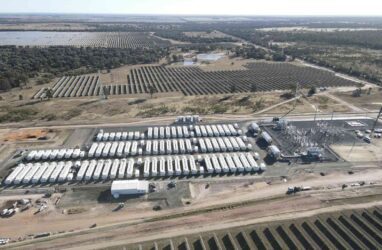
In the energy world, the evening peak has long been the domain of gas-fired peaker plants—fast-ramping generators that kick in as solar fades and demand surges. But a quiet revolution has swept through Queensland (the Sunshine State), where big batteries have not only taken a bite out of that peak but have now devoured the entire dinner. Over the past few months, battery storage has completely displaced gas generators during evening peaks, a stunning shift that is reshaping grid economics. This guide walks you through the practical steps to replicate that success—whether you are a utility, developer, or grid operator—by turning battery storage into the new king of the peak.
What You Need
- A grid-scale battery system (100 MW or larger) with at least 2–4 hours of duration to cover the full evening peak.
- Transmission interconnection to a network with high solar penetration (e.g., Queensland) where daytime solar surpluses are cheap.
- Market participation rights in a wholesale electricity market with 5-minute dispatch intervals (like Australia’s NEM) to capitalize on fast response.
- Energy management software for automated arbitrage and bidding.
- Capital or financing for upfront costs (battery costs have fallen ~80% over the last decade).
- A favorable regulatory framework that values rapid ramping and does not unduly penalize storage as a load.
Step-by-Step Guide
Step 1: Understand the Evening Peak Challenge
The evening peak—typically from 5 PM to 9 PM—occurs when solar generation plummets, home energy use spikes, and wind may be low. Historically, gas peakers filled the gap with their 10-minute start-up time. Batteries can respond in milliseconds. Your first step is to analyze your local evening peak profile: exact hours, magnitude, and existing generation mix. In Queensland, the peak coincides with high air-conditioning load and a steep ramp from solar decline. Use historical data to size your battery accordingly. The key insight: you don’t need to run all night—just cover the critical 3–4 hour window where gas was king.
Step 2: Charge with Cheap Daytime Solar
Batteries only displace gas if they are charged cheaply. In solar-rich regions, midday solar can drive wholesale prices to near zero or even negative. Install your battery to charge during these hours—typically 10 AM to 3 PM. If you are co-located with a solar farm, you can charge directly; if not, buy from the grid at low prices. Use automated trading software to trigger charging when the price falls below a set threshold (e.g., $0/MWh). This is the economic fuel that lets you undercut gas later.
Step 3: Configure Your Battery for Fast, Reliable Discharge
Gas peakers are valued for their speed, but batteries are faster. Program your battery management system to discharge at full capacity the instant the evening ramp begins. Start ramping up just before 5 PM to capture the highest prices. Set your software to bid the entire capacity into the spot market at a price slightly below the gas peakers’ marginal cost. Since gas plants have fuel costs and startup constraints, you can bid aggressively (even at zero) and still profit from price spikes. In Queensland, batteries now routinely set the clearing price during peaks, pushing gas out.
Step 4: Participate in Ancillary Services for Extra Revenue
Evening peaks are not just about energy—they are rich in frequency regulation and fast contingency services. Register your battery to provide Frequency Control Ancillary Services (FCAS) like regulation raise/lower. Your battery’s speed allows you to earn revenue while sitting ready for the peak. This extra income can cover up to 30% of your project cost and makes your evening peak bid even more aggressive. Many battery operators in Queensland derive significant revenue from FCAS during the shoulder hours before the peak.

Step 5: Scale and Cluster for Grid Dominance
A single battery may displace one gas plant; a cluster can replace an entire fleet. Work with network operators to aggregate multiple batteries (e.g., 400 MW spread across substations) to act as a virtual power plant. This increases total dispatchable capacity and provides locational benefits. In Queensland, several large batteries (like the 100 MW/200 MWh system near Ipswich) coordinate via a central dispatch system. As you scale, gas peakers become uneconomical to maintain and eventually retire. That is exactly what happened: in the last few months, gas generators stopped running during evening peaks altogether.
Step 6: Monitor and Adapt to Market Evolution
The energy transition is dynamic. Gas plants may try to lower costs, or solar generation may grow further, shifting the peak. Implement a continuous improvement loop: analyze daily dispatch data, adjust charge/discharge thresholds, and tweak bidding strategies. Use machine learning to predict price spikes. Also, plan for battery degradation—cycle life matters. In Queensland, operators have found that shallow cycles (80% DoD) still yield excellent returns. Over time, as more batteries enter, the evening peak may flatten, but first-movers retain long-term contracts. Keep an eye on new storage technologies (like iron-air) that could extend duration.
Tips for Success
- Think like a peaker, not a baseload plant. Your strength is speed and flexibility—focus on the 3–4 hour window where gas used to rule.
- Use multiple revenue streams. Never rely solely on energy arbitrage. Stack capacity payments, FCAS, and network support contracts to de-risk your investment.
- Coordinate with solar generators. A co-located solar-plus-battery can optimize both assets: solar charges the battery for free when curtailment is high.
- Start small, then scale. The first battery may only take a “bite” of the peak. But as you expand, you can “eat the whole dinner.”
- Stay nimble. Market rules evolve—advocate for short dispatch intervals and fast settlement to preserve your advantage over slower gas plants.
- Prepare for battery ageing. Include replacement reserves in your financial modeling; by year 10, your battery may still be profitable even with reduced capacity.
- Learn from Queensland. The Sunshine State’s mix of high solar, supportive regulations, and forward-thinking grid operators made the battery breakthrough possible. Adapt those lessons to your own region.
Following these steps can help you replicate the remarkable story of how big batteries transformed the evening peak—from taking a modest bite to consuming the whole meal. The technology is proven; now it’s about strategy and execution.
Related Articles
- Tesla Unveils Semi Charging Program: Basecharger and Megacharger Costs Revealed
- Walmart and ABB's 400 kW EV Fast Chargers: Full Q&A Guide
- Chinese Electric Vehicles and the U.S. Market: A Crossroads of Opportunity and Challenge
- China Electric Vehicle Update: Highlights from Beijing Auto Show, Xiaomi SU7 Test Drive, BYD Developments, and New Home Battery Pilot
- Optimizing WebAssembly Execution with Speculative Inlining and Deoptimization: A Step-by-Step Guide
- 6 Astonishing Facts About Interstellar Comet 3I/ATLAS and Its Alien Water
- Why the SECURE Data Act Falls Short as a Consumer Privacy Law
- Solar-Battery Hybrid Project in Wheatbelt Town Gets Planning Nod Alongside Standalone Battery