BYD's April Export Milestone: Surpassing Tesla's Global Sales
In April, Chinese automaker BYD achieved a remarkable feat by exporting more vehicles than Tesla sold worldwide during the same period. According to data shared by CleanTechnica reader "trackdaze," BYD exported 135,098 vehicles — all fully battery electric or plug-in hybrid models. This milestone underscores BYD's aggressive global expansion and growing dominance in the electric vehicle market. Below, we answer key questions about this achievement and its implications.
What record did BYD set in April regarding vehicle exports?
In April, BYD exported 135,098 vehicles, all of which were either fully battery electric or plug-in hybrid electric vehicles. This number represents a new high for the company's monthly exports and highlights its ability to scale production and distribution beyond China. The figure is particularly striking because it exceeds Tesla's global sales for the same month. BYD's export portfolio includes popular models like the Atto 3, Dolphin, and Seal, which have been gaining traction in markets across Europe, Southeast Asia, and Latin America.
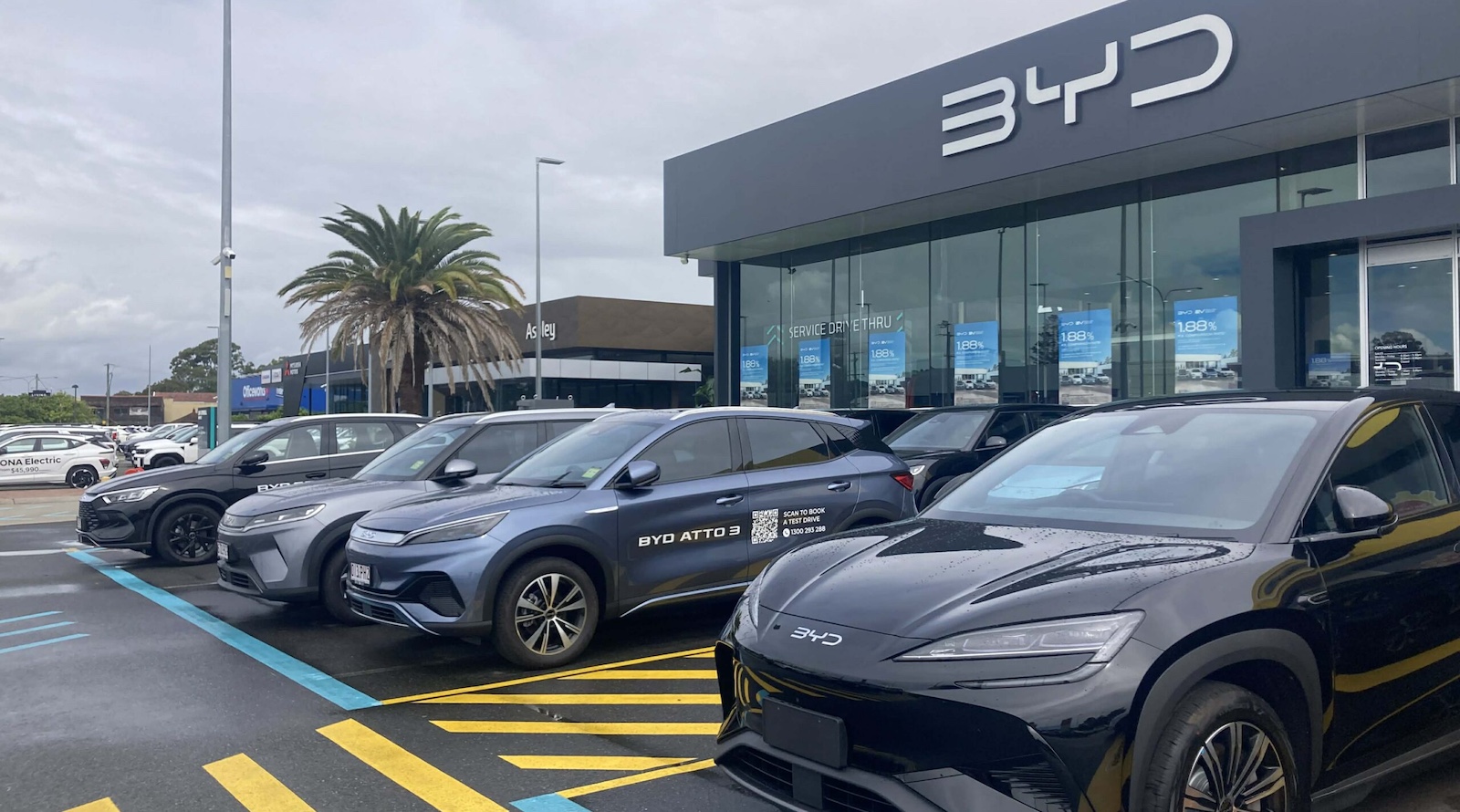
How did BYD's export figures compare to Tesla's global sales?
BYD's April exports of 135,098 vehicles surpassed Tesla's worldwide sales for the month. While Tesla does not release monthly sales precisely, estimates based on quarterly reports suggest Tesla sold roughly 120,000 to 130,000 vehicles globally in April. This means BYD alone, through exports, moved more units than the American EV giant sold in its entire global network. The comparison is especially notable because BYD's exports are only part of its total sales; the company also sold a large number of vehicles domestically in China, pushing its overall April sales well above 200,000.
What types of vehicles did BYD export in April?
All 135,098 exported vehicles were new energy vehicles (NEVs), including both pure battery electric vehicles (BEVs) and plug-in hybrid electric vehicles (PHEVs). This aligns with BYD's strategy to lead the transition to electrified transportation. The mix includes popular passenger cars like the BYD Atto 3 (a compact SUV), the Dolphin (a hatchback), and the Seal (a sedan targeting the midsize market). BYD also exports commercial vehicles, such as electric buses and trucks, though the April figure primarily reflects passenger car exports. The company's Blade Battery technology powers many of these models, offering safety and range advantages.
Why is this milestone significant for BYD and the EV industry?
This milestone demonstrates that BYD has evolved from a domestic Chinese champion into a global powerhouse. Surpassing Tesla's worldwide sales with exports alone signals that BYD's manufacturing scale, supply chain integration, and competitive pricing are resonating internationally. For the EV industry, it indicates that competition is intensifying: Chinese manufacturers are not just cost leaders but also innovators. The achievement also pressures legacy automakers and Tesla to accelerate cost reductions and expand production capacity. Moreover, it validates BYD's bet on plug-in hybrids alongside full EVs, showing that a diversified electrification strategy can capture more market segments.
What does this data reveal about BYD's global expansion strategy?
BYD's April export numbers reveal a deliberate strategy to penetrate overseas markets aggressively. The company has been building production plants in Thailand, Brazil, Hungary, and other regions, but its export surge shows that even without local manufacturing in many countries, it can ship vehicles from China efficiently. BYD is targeting markets with high demand for affordable EVs, such as Southeast Asia and Europe. The company has also secured distribution partnerships and is investing in local sales networks. This export-led growth allows BYD to bypass tariffs and regulatory hurdles in the short term while establishing brand recognition before localized production ramps up.
How does this achievement reflect broader trends in the electric vehicle market?
The fact that a single Chinese manufacturer can export more EVs than Tesla sells globally highlights a shift in the center of gravity of the EV industry. China has become the world's largest EV producer and exporter, benefiting from economies of scale, government support, and a mature battery supply chain. This trend is accelerating: other Chinese brands like SAIC, NIO, and XPeng are also expanding exports. Meanwhile, Tesla faces increasing competition not only from BYD but from traditional automakers like Volkswagen and Hyundai. The data suggests that affordable EVs from China are likely to capture a growing share of global markets, especially in price-sensitive segments.
What are the implications of this news for investors and competitors?
For investors, BYD's export surge reinforces its position as a top contender in the global EV race. It may prompt a reassessment of Tesla's market leadership and valuation. Competitors, especially legacy automakers, need to accelerate their electrification plans and reduce costs to remain relevant. The news also highlights the importance of vertical integration — BYD controls its supply chain, including batteries, which gives it a cost advantage. However, potential headwinds include trade tensions, tariffs on Chinese EVs (e.g., EU anti-subsidy investigations), and the need to build local service infrastructure. Overall, the milestone underscores that the EV market is becoming more fragmented and competitive.
Related Articles
- Massive E-Bike Savings Flood Market: ENGWE, Lectric, Segway, and Aventon Slash Prices
- 10 Unexpected Ways Icebergs in Crowds Melt Differently
- 10 Key Insights into Chery’s Brand Portfolio and Its Canadian Potential
- Tank Pad Ultra Breaks Cover: Rugged Tablet Packs Brighter Projector, Weaker Processor at $599
- Mastering Dart and Flutter Development with Agent Skills
- Decoding the Heavy Water Mystery of Interstellar Comet 3I/ATLAS: A Guide for Astronomy Enthusiasts
- Navigating Away from the Sea of Nodes: V8's Shift to Turboshaft
- Why the SECURE Data Act Fails to Protect Consumer Privacy