Intel and Apple Reportedly Forge Chip Production Partnership Amid Market Surge
A New Chapter in Silicon Valley Collaboration
Intel Corporation has reportedly finalized a preliminary agreement with Apple Inc. to manufacture semiconductors for select Apple devices, according to sources cited by The Wall Street Journal. The deal, which took over a year of negotiations, marks a significant shift in the relationship between the two tech giants and sent Intel's stock soaring nearly 14% in after-hours trading.
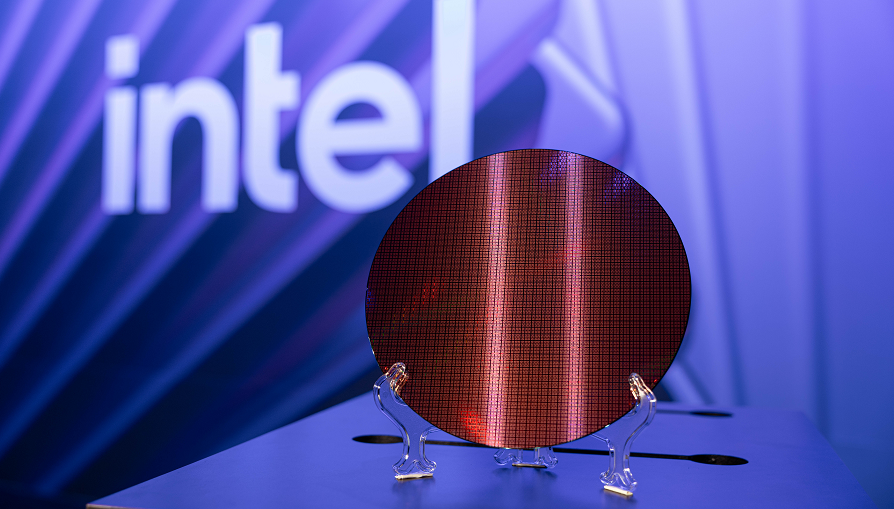
While neither company has officially commented on the report, the news underscores Intel's ambitious push to become a leading contract chipmaker under its IDM 2.0 strategy. For Apple, the move could diversify its supply chain, reducing reliance on Taiwan Semiconductor Manufacturing Company (TSMC) amid geopolitical tensions.
Details of the Reported Agreement
According to the Wall Street Journal, Intel and Apple signed the preliminary deal in recent months. The agreement is expected to cover chip production for some of Apple's devices, though specific product lines have not been disclosed. Industry analysts speculate that Apple may leverage Intel's advanced manufacturing nodes for components like modems or future custom silicon.
The protracted negotiation period—spanning more than a year—suggests complex terms, likely involving intellectual property protections, capacity guarantees, and pricing structures. This deal would mark Apple's first major foray into using Intel as a foundry partner since the company transitioned its Mac lineup to Apple Silicon chips designed in-house.
Market Reaction and Investor Sentiment
Intel shares closed 13.9% higher on the day of the report, reflecting investor optimism that the chipmaker can revive its foundry business. The stock jump added billions to Intel's market capitalization and signaled confidence in CEO Pat Gelsinger's turnaround plan.
Analysts note that winning Apple—the world's most valuable company—as a foundry customer would be a major validation of Intel's manufacturing capabilities. However, they caution that the preliminary nature of the deal means final terms and volume commitments remain uncertain.
Intel's Foundry Ambitions
Intel has been investing heavily in its foundry services, aiming to compete with TSMC and Samsung. The company plans to spend over $100 billion on new fabs in the U.S. and Europe, partly supported by the CHIPS Act. Securing a high-profile customer like Apple could help Intel attract more clients and improve utilization rates for its advanced nodes, such as Intel 4 and Intel 3.

Gelsinger has frequently stated that Intel's future depends on becoming a world-class foundry. This deal would be a concrete step toward that vision, potentially opening doors to other large tech firms seeking alternative suppliers.
Apple's Supply Chain Diversification
For Apple, adding Intel as a supplier reduces dependence on TSMC, which currently manufactures most of Apple's custom chips, including A-series and M-series processors. Geopolitical risks in Taiwan have prompted Apple to explore dual-sourcing options. While Intel's manufacturing is still catching up to TSMC's cutting-edge nodes, the deal could cover older or less complex chips.
Apple has also been developing its own modem chips to replace Qualcomm's, and Intel's 5G modem expertise—acquired from Apple's purchase of Intel's modem business in 2019—could align with these efforts.
Competitive Landscape
The reported partnership highlights the evolving dynamics of the semiconductor industry. TSMC remains dominant, but Intel's resurgence could reshape the market. Other players like AMD and NVIDIA may also consider Intel as a foundry option for specific products. However, the deal's impact on Apple's existing relationship with TSMC remains to be seen.
Outlook and Next Steps
While the preliminary deal is a positive sign, full commercial agreements may take months or years to finalize. Both companies face technical challenges, including process compatibility and yield improvements. If successful, the partnership could accelerate Intel's foundry road map and give Apple greater flexibility in its chip supply.
Investors will watch for official announcements from Intel and Apple, as well as updates during Intel's next earnings call. The technology world will be keenly observing whether this tentative collaboration blossoms into a long-term strategic alliance.
Related Articles
- How to Assess the Market Implications of a Chip Manufacturing Partnership: A Step-by-Step Guide
- 7 Key Advances in Intel's Crescent Island GPU Driver for Linux 7.2
- A Step-by-Step Guide to Boosting Production Capacity in the Age of AI Chip Demand
- 10 Ways to Unlock the MacBook Neo's Hidden Performance Through Cooling
- Rust 1.97 Drops Support for Pre-Volta GPUs and Older CUDA Drivers – New Baseline Announced
- NVIDIA CUDA Target Baseline Update: What Rust 1.97 Means for GPU Compilation
- New 'Proxy-Pointer' AI Framework Revolutionizes Enterprise Document Analysis
- AMD CTO Reveals AI Compute Paradox: Agents Both Consume and Accelerate Chip Innovation