Psyche Spacecraft Captures Stunning Crescent Mars Image Ahead of Gravity Assist
The Gravity Assist Maneuver
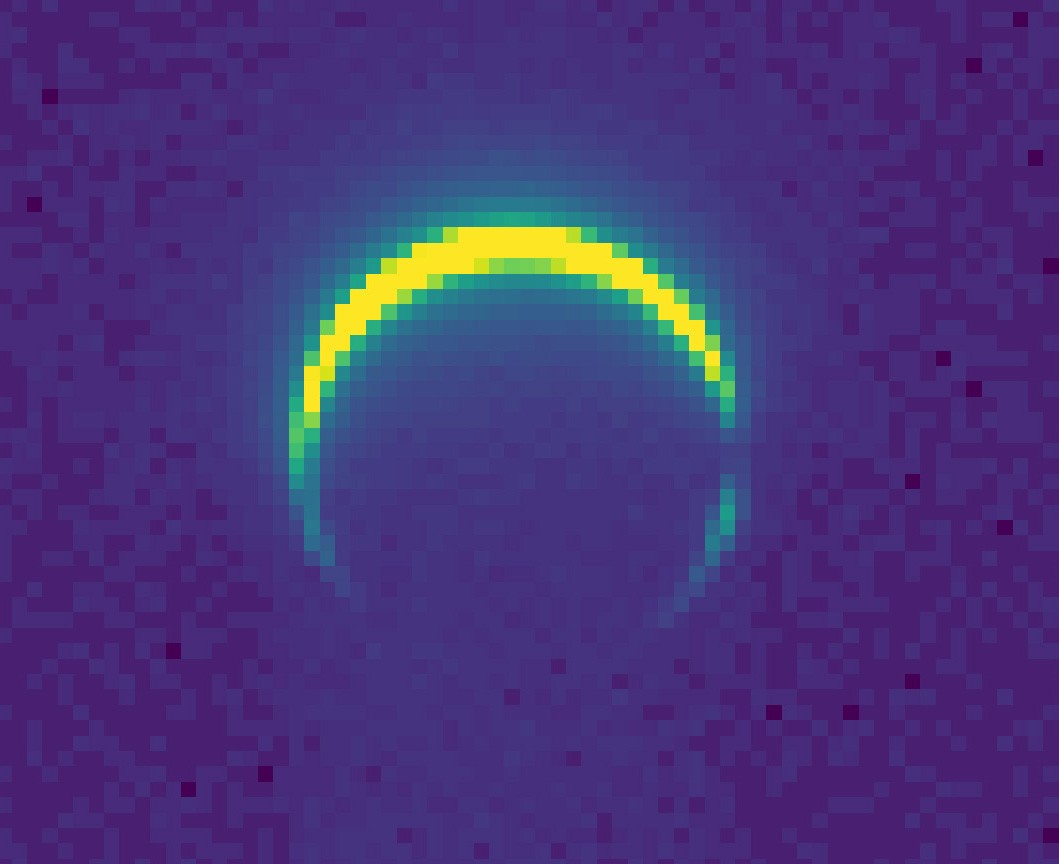
On May 3, 2026, NASA's Psyche mission captured a striking colorized image of Mars from approximately 3 million miles (4.8 million kilometers) away. This observation is a key step in the spacecraft's journey as it prepares for a gravity assist around the Red Planet on May 15. This maneuver will provide a critical speed boost and adjust Psyche's trajectory toward its ultimate destination: the asteroid Psyche, which it is scheduled to reach in 2029.
Timing and Distance
The image was taken when the spacecraft was still far from Mars, allowing a broad view of the planet's thin crescent. The gravity assist is designed to harness Mars's gravitational field to accelerate and redirect Psyche, saving propellant and shortening the travel time to the asteroid.
A Unique View of Mars
Psyche is approaching Mars from a high-phase angle, meaning the Sun is positioned above both the spacecraft and the planet, out of the frame. Consequently, Mars appears as a slender crescent, much like our Moon during its new phase. This perspective offers scientists a rare glimpse of the planet's illuminated edge and atmospheric behavior.
Imaging Challenges
The image was acquired using the multispectral imager's panchromatic (broadband) filter with an exposure time of just 2 milliseconds. Despite this ultra-short exposure, the crescent is extremely bright, leading to oversaturation in some areas. No stars are visible in the background because they are far dimmer than the sunlight reflected by Mars. The brightness was difficult to predict beforehand because of variable dust levels in the Martian atmosphere, which can change rapidly.
Atmospheric Scattering and the North Polar Cap
The dust in Mars's atmosphere scatters sunlight, causing the crescent to appear extended farther around the planet than it would if Mars were airless (like our Moon). An interesting feature appears on the right side of the extended crescent: a noticeable gap. This coincides with the planet's icy north polar cap, which is currently in its winter season. Mission specialists hypothesize that seasonal clouds and hazes are forming in that region, possibly blocking the dust's ability to scatter sunlight as effectively as elsewhere.
Scientific and Navigational Value
Beyond its visual appeal, the image serves important scientific and engineering purposes. The Psyche mission's imager team will use this and upcoming observations to calibrate the cameras and characterize their performance in flight. This is a practice run for the spacecraft's approach to asteroid Psyche in 2029, where precise imaging will be crucial for navigation and scientific study.
Imager Team Preparations
In the lead-up to the close approach on May 15, the team will continue acquiring, processing, and interpreting similar images. These tests help refine the instruments and procedures, ensuring a successful encounter with the asteroid.
For more details about the Psyche mission, visit the official NASA Psyche page.
Related Articles
- How a Pair of Mismatched Exoplanets Found Stability After Travelling Inward from the Cold
- Breaking the Memory Barrier: How State-Space Models Enhance Video World Models
- Turning Data Chaos into Urban Clarity: An AI Breakthrough for City Planners and Emergency Teams
- From Flight Surgeon to Space: The Unconventional Journey of NASA Astronaut Anil Menon
- Understanding Quantum-Safe Ransomware: A Guide to the Kyber Family's ML-KEM Encryption
- Global Forest Loss Declines Amid Policy Shifts and EU Deforestation Law Changes
- DeepSeek Unveils Breakthrough in Inference-Time AI Scaling, Hints at Next-Gen R2 Model
- Revolutionary 'Super Steel' Could Slash Costs of Green Hydrogen Production from Seawater